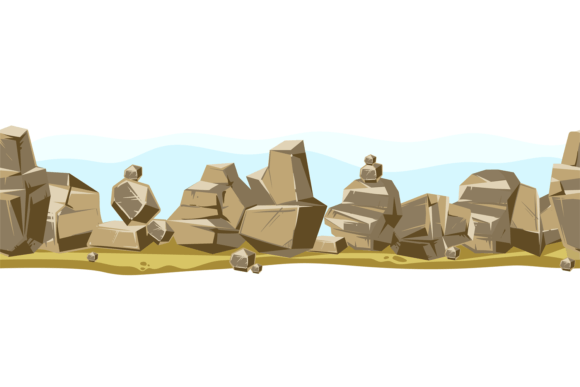
Rocky Game Background. Horizontal Seamle: What It Is and Why It Matters
Rocky Game Background. Horizontal Seamle is a type of digital asset used primarily in game development and design. It allows creators to build immersive environments by providing a seamless, repeating horizontal landscape that mimics rocky terrain. Whether you're a game designer, a digital artist, or someone building a 2D platformer, this kind of background offers a practical way to simulate depth and continuity without breaking the visual flow.
Why People Choose Rocky Game Background. Horizontal Seamle
Designers often turn to Rocky Game Background. Horizontal Seamle for its flexibility and efficiency. It can be tiled across large areas without visible seams, making it ideal for side-scrolling games, animated scenes, or even digital illustrations. Available in multiple formats—like EPS, JPG, SVG, and transparent PNG—it caters to a variety of editing tools and platforms. Its adaptability makes it a popular choice among both beginners and professionals looking to streamline their workflow.
Common Mistakes When Using Rocky Game Background. Horizontal Seamle
Despite its usefulness, many users run into issues due to misunderstandings or overlooked details. Here are some common pitfalls and how to avoid them:
1. Ignoring Resolution and Format Compatibility
One of the most frequent errors is choosing the wrong file format or low-resolution image. For example, using a JPG instead of a transparent PNG when transparency is required can lead to poor visual results. Similarly, using a low-resolution EPS in a high-definition game environment may cause pixelation or blurry edges.
- Solution: Always verify the format and resolution needed for your specific project. If you're working with layered designs or need transparency, go for SVG or transparent PNG files. For print or high-quality rendering, EPS is usually the best option.
2. Overlooking Tiling Quality
Not all Rocky Game Background. Horizontal Seamle assets are created equal. Some backgrounds may look seamless at a glance but reveal visible seams when tiled across large areas. This can break immersion and make the environment feel artificial.
- Solution: Test the background in a mock-up or tiling preview before finalizing. Look for assets that are explicitly labeled as "seamless" and created with edge-matching techniques. If possible, zoom in and check the borders for alignment and texture continuity.
3. Mismatching Art Style
Rocky Game Background. Horizontal Seamle comes in various styles—some realistic, others stylized or cartoonish. Using a background that doesn't match your game's visual tone can create a jarring experience for players.
- Solution: Align the background's art style with your game's characters, UI, and other visual elements. If your game uses a pixel art aesthetic, look for a Rocky Game Background. Horizontal Seamle that complements that style rather than clashes with it.
4. Underestimating File Size and Performance
High-quality assets often come with larger file sizes. While SVG and PNG files offer transparency and detail, they can also slow down performance if used excessively or without optimization.
- Solution: Compress images where appropriate, and consider using JPG versions for backgrounds that don’t require transparency. Also, implement texture atlasing or sprite batching techniques to improve rendering efficiency.
What to Check Before Downloading or Buying Rocky Game Background. Horizontal Seamle
Before committing to a Rocky Game Background. Horizontal Seamle, it's important to evaluate a few key aspects to ensure it meets your project’s needs:
- License Type: Confirm whether the asset is free for commercial use or requires attribution. Some platforms offer royalty-free licenses, while others may restrict usage depending on your project type.
- File Quality: Check the resolution, color depth, and compression level. High-quality assets should be crisp and clear, especially when scaled.
- Preview Options: Use preview tools or demo versions if available. Seeing how the background behaves in a real-world context can save time and effort later.
- Developer Support: Look for assets that come with documentation or support from the creator. This can be especially helpful if you're new to integrating such backgrounds into your project.
Realistic Examples of Rocky Game Background. Horizontal Seamle in Use
Consider a 2D side-scroller game where the player moves through a rugged terrain. Using a properly tiled Rocky Game Background. Horizontal Seamle can give the illusion of endless movement without the need for custom drawing each frame. In contrast, a poorly chosen background might repeat too obviously or cause visual fatigue over time.
Another example is in digital storytelling or educational apps where a consistent landscape is needed to set the scene. Here, the seamless nature of the background allows creators to focus on character animation and narrative without worrying about environmental inconsistencies.
Better Approaches to Integrating Rocky Game Background. Horizontal Seamle
Instead of treating the background as a static image, consider animating it subtly—like adding parallax scrolling or slight wind effects on distant rocks. This not only enhances realism but also keeps the environment dynamic and engaging.
Layering multiple backgrounds can also create depth. For instance, using a Rocky Game Background. Horizontal Seamle as the base layer and adding a midground with moving elements like dust or flying debris can add motion and immersion without complicating the design too much.
Final Thoughts
Rocky Game Background. Horizontal Seamle is more than just a visual shortcut—it's a tool that, when used correctly, can elevate your project's quality and user experience. By avoiding common mistakes like mismatched formats, poor tiling, or style inconsistencies, you can ensure your environment feels cohesive and professional. Always test before finalizing, and choose assets that align with your project's goals and technical requirements. With a thoughtful approach, this versatile background can become a valuable part of your creative toolkit.